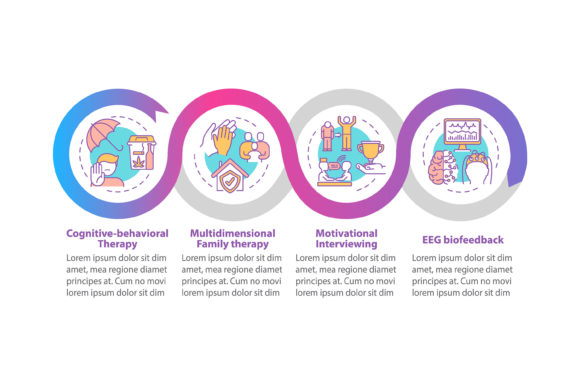
Addiction Treatment Methods
As an embroidery designer and product reviewer, I’ve evaluated countless machine embroidery designs. Addiction Treatment Methods stands out as a vector infographic template that blends clarity with professionalism. Its clean layout and structured approach make it ideal for custom apparel, educational materials, and handmade products that require visual storytelling.
First Impressions: A Design That Speaks Clearly
The Addiction Treatment Methods design immediately conveys a sense of order and purpose. The use of line icons, process timelines, and data visualization elements creates a visual rhythm that’s easy to follow. The layout is balanced, with enough detail to inform but not overwhelm. It feels like a professional presentation tool, which makes it a strong candidate for embroidered patches, tote bags, or even digital mockups for craft businesses.
The theme is straightforward—focused on therapy, treatment steps, and workflow. This makes it perfect for projects aimed at wellness, mental health awareness, or educational content. The design’s simplicity allows it to adapt well to different color schemes and fabric types, making it versatile for both personal and commercial use.
Real-World Use: Where It Shines and Where It Needs Care
When considering Addiction Treatment Methods for real embroidery projects, the design works best on flat surfaces like t-shirts, sweatshirts, and tote bags. The line-based structure avoids dense stitch areas that could cause puckering or distortion. However, it may struggle with curved surfaces like caps or baby onesies where the design’s corners might not align perfectly with the fabric’s shape.
This design is also suitable for embroidered patches and applique work. The clean lines and minimal fill areas allow for precise stitching without overloading the hoop. For small hoop sizes, it’s important to check if the design can be split into sections or scaled appropriately. If the design is too large for your hoop, it could result in uneven stitching or missed details.
On textured or stretchy fabrics, the design may appear slightly blurred or distorted. A good stabilizer is essential here, especially for thin or delicate materials. Thread color contrast is another factor to consider—light colors on dark backgrounds can create a striking effect, while dark threads on light fabrics offer a subtle, elegant look.
Visual Appeal and Customer Perception
Addiction Treatment Methods has a polished, professional look that can elevate the perceived value of a handmade product. When used on custom apparel or personalized gifts, it adds a layer of sophistication that resonates with customers looking for meaningful, well-designed items.
For small business owners and Etsy sellers, this design can serve as a strong visual asset for branding. It’s especially effective when paired with other wellness-themed embroidery files, creating a cohesive collection that appeals to niche markets. The design’s clarity also helps build customer trust, as it communicates a clear message without unnecessary embellishments.
It’s important to test the design on different fabric types before finalizing a project. For example, on a holiday gift like a embroidered kitchen towel or pillow cover, the design should remain legible and visually appealing after multiple washes. Using the right stabilizer and proper stitch density will help maintain its integrity over time.
Practical Designer Notes
Before using Addiction Treatment Methods in any project, I recommend testing it on scrap fabric. This helps identify any potential issues with stitch density, thread color, or fabric compatibility. For instance, if the design includes tiny lettering or detailed corners, these areas may need extra attention during the embroidery process.
When working with dark fabrics, ensure that the thread color provides sufficient contrast. On light fabrics, a softer tone might be more appropriate. Also, consider how the design looks in black and white mockups—this can help determine if it’s suitable for print-on-demand or digital product previews.
If you’re planning to sell finished products or digital embroidery files, always confirm the licensing terms. While Addiction Treatment Methods appears to be a general-purpose design, it’s crucial to verify whether it’s suitable for commercial use and if there are any restrictions on resale or modification.
Best Fit for Specific Projects
Addiction Treatment Methods is ideal for embroidered patches, tote bag designs, and sweatshirt embroidery. It can also be used in nursery decor, such as baby onesies or blankets, where a clean, informative design is preferred. For holiday gifts, the design offers a thoughtful, meaningful touch that can be customized with seasonal elements.
Small shop owners and crafters will find it useful for creating printable mockups or digital product previews. Its structured layout makes it easy to integrate into marketing materials, helping to attract customers who value quality and intentionality in their purchases.
As a creative entrepreneur, I appreciate designs that offer flexibility without sacrificing clarity. Addiction Treatment Methods fits this criterion well, provided it’s used with care and attention to detail. Whether you're creating a handmade product for your own shop or preparing a client project, this design has the potential to add value and meaning to your work.