Food Restrictions in Religion Graphics
As a designer working with branding, marketing visuals, and digital products, I often seek out high-quality graphic design assets that can elevate a project without requiring hours of custom work. Food Restrictions in Religion is one such asset that caught my attention for its clean, informative style and potential to support a variety of creative design projects.
First Impressions: A Visual Guide to Religious Dietary Laws
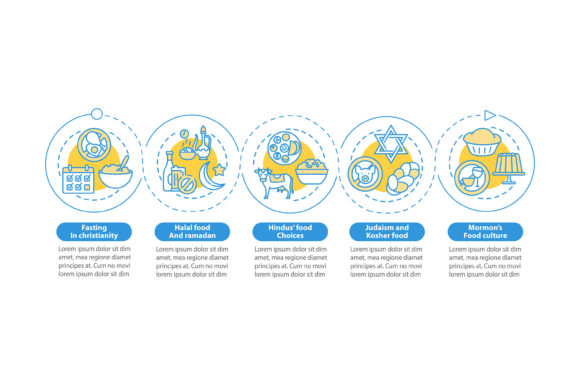
The Food Restrictions in Religion vector infographic template immediately conveys a sense of clarity and structure. Its use of linear icons, process timeline charts, and data visualization elements makes it ideal for educational or informational content. The visual mood is professional yet approachable, fitting well within modern design trends while maintaining a level of sophistication suitable for both digital and print applications.
The Halal food presentation design elements suggest a focus on cultural awareness and religious context, which could be valuable for brands targeting specific communities or those looking to highlight ethical sourcing and dietary inclusivity.
Real-World Applications for Designers
When considering how Food Restrictions in Religion might fit into a real client project, I see several possibilities. For instance, a small business or handmade brand launching a seasonal campaign around cultural awareness could benefit from this asset. It could serve as a supporting element in packaging design, a decorative accent in product mockups, or even as part of a social media graphics series highlighting different religious practices.
This design asset also works well in editorial design, where visual hierarchy and clear communication are key. Whether used in blog visuals, website graphics, or Canva templates, the structured layout allows for easy integration into existing brand systems without overwhelming the overall composition.
Best Use Cases: Where It Shines
Food Restrictions in Religion excels in large layout areas, where its detailed icons and process timeline chart can be fully appreciated. It’s particularly effective as a hero graphic or in product mockups that require a strong visual anchor. As a sublimation design or sticker design, it offers a clean, scalable format that translates well to t-shirts, mugs, and tote bags.
It also fits naturally into themed collections or campaign visuals, especially for brands that want to emphasize diversity, tradition, or cultural storytelling. As a printable design, it can be used in wall art, downloadable resources, or educational materials, making it a versatile addition to any design bundle.
Caution Areas: When to Avoid It
While Food Restrictions in Religion is visually appealing, it may not be the best choice for every project. In small sizes or crowded layouts, the details can become lost or unclear, reducing its effectiveness. Similarly, in minimalist branding or professional corporate materials, the complexity of the design may clash with a more restrained aesthetic.
Projects that require a very clean visual hierarchy or low-contrast designs may find this asset too busy or distracting. It’s important to test it in various contexts before finalizing its use in a client project.
Impact on Readability and Brand Consistency
One of the most critical aspects of any design asset is its ability to maintain readability and support brand consistency. Food Restrictions in Religion, with its clear data visualization and structured layout, helps reinforce a message without compromising legibility. However, designers should ensure that the color palette and typography align with the overall brand identity.
For a handmade business or small business branding project, this asset can add a layer of professionalism and cultural relevance. It enhances visual trust and recognition, especially when used in marketing visuals or social media posts that aim to engage a broader audience.
Practical Designer Notes: What to Check Before Using
Before incorporating Food Restrictions in Religion into a client project, there are several practical steps to take. First, test it in black and white to ensure it remains readable and effective without color. Check contrast on both light and dark backgrounds to avoid visibility issues in different environments.
Preview the design at small and large sizes to confirm that details remain sharp and legible. Place it on real mockups to see how it interacts with other design elements. Test print quality if it will be used in physical formats like packaging design or merchandise.
Review file formats—especially if it includes PNG transparency or SVG design elements. Confirm that the asset is editable and compatible with your design software. Compare it with different font styles to see how it pairs with serif, sans serif, script, or display fonts.
Finally, always verify the commercial license to ensure it can be used for client or business projects without legal issues. This is especially important for print-on-demand sellers or Etsy products that require proper licensing.
Conclusion: A Valuable Addition for Creative Projects
Food Restrictions in Religion is a well-crafted graphic design asset that offers value across multiple design disciplines. Whether used in logo design, packaging design, or social media graphics, it brings a level of clarity and cultural insight that can enhance a project’s overall impact.
For designers looking to support a small business branding initiative, a handmade product line, or an editorial project, this asset provides a solid foundation for visual storytelling. Its versatility, combined with thoughtful design elements, makes it a useful tool in the creative marketplace.