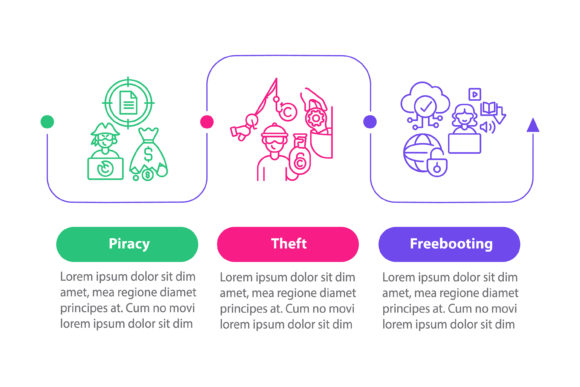
Copyright Violation Types
As an embroidery designer and product reviewer, I often find myself evaluating digital files for their practicality in real-world projects. Copyright Violation Types caught my attention not just for its subject matter, but for how it could be applied in various embroidery scenarios. This vector infographic template offers a clear, data-driven visual that could work well in both educational and commercial contexts.
First Impressions: A Clear Visual Narrative
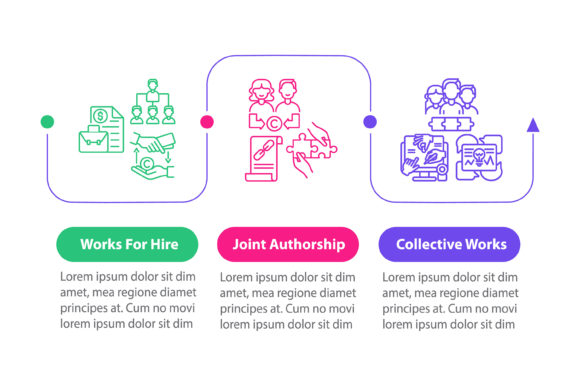
The design immediately conveys a sense of structure and clarity. With its three-step process and linear icons, it feels like a professional presentation tool. The layout is clean, with a focus on readability and visual flow. The use of simple shapes and minimal text makes it adaptable to different embroidery formats, from applique designs to fill stitches.
This kind of design would naturally fit into a custom embroidered tote bag or a sweatshirt that aims to educate or inform. It’s not the most decorative piece, but it has a strong visual identity that could stand out in a craft fair booth or an Etsy listing. The theme is serious, which might make it less suitable for baby items or holiday gifts, but more appropriate for business branding or educational materials.
Real-Life Embroidery Applications
When considering where to place Copyright Violation Types, it’s important to think about the type of project and the audience. For a small shop product or a boutique brand, this design could serve as a subtle yet meaningful statement. It could also be used as a printable mockup for digital product sellers or as part of a downloadable design asset for craft businesses.
In custom apparel, such as a sweatshirt or tote bag, the design would need to be scaled appropriately. The linear icons and process timeline chart are relatively simple, so they should translate well into machine embroidery designs. However, if the design includes intricate details or tiny lettering, it may require careful attention to stitch density and stabilizer use.
For a personalized gift, like a baby onesie or a holiday ornament, the design might feel too formal. But as a patch or an embroidered cap, it could add a unique touch to a handmade product. The key is to match the design’s tone with the intended use and audience.
Where to Use with Caution
While Copyright Violation Types is a strong design, there are certain situations where it might not perform as well. On small hoop sizes, the detail could become lost, especially if the design is scaled down. Textured fabrics or thin materials may not hold the stitches as well, leading to a less defined final product.
On dark fabric, the contrast between the thread color and the background could be an issue. If the design relies on light-colored threads, it might not show up clearly. Similarly, stretchy fabrics or layered garments could cause distortion, making the design look uneven after stitching.
Curved surfaces, like caps or hoods, can also be tricky. The linear elements of the design may not follow the curve as smoothly as needed. In such cases, it might be better to simplify the design or adjust the placement to avoid stretching or warping.
Impact on Visual Appeal and Customer Perception
The visual appeal of Copyright Violation Types depends largely on how it’s executed. If the stitch density is too high, it could appear bulky or stiff. On the other hand, if the design is too sparse, it might lack definition. Balancing these elements is crucial for maintaining a professional look.
From a customer perspective, this design could enhance the perceived value of a handmade product. It adds a layer of meaning and sophistication, especially if the item is being sold as an educational or informative piece. However, it’s important to ensure that the design aligns with the overall brand identity and doesn’t feel out of place.
For an Etsy seller or a small shop owner, the design could be a conversation starter. It might attract buyers who appreciate thoughtful, meaningful content. But it’s also important to consider whether the target audience will find it relevant or appealing.
Practical Designer Notes
Before using Copyright Violation Types in a real project, I recommend testing it on scrap fabric. This allows you to see how the design looks in different thread colors and fabric textures. Checking the stitch density is also essential—too much density can cause puckering, while too little can make the design look weak.
Confirming the hoop size is another important step. If the design is too large for your machine’s hoop, you may need to split it into sections or resize it. Inspecting small details, like corners and lettering, ensures that they remain sharp and legible after stitching.
Testing the design in black and white mockups helps identify any issues with contrast or visibility. Comparing it on light and dark fabric backgrounds can also reveal potential problems. Using the right stabilizer is crucial, especially on delicate or stretchy fabrics.
Finally, always check the licensing terms before selling finished products or digital files. Even though Copyright Violation Types is a vector infographic, it’s important to confirm whether it can be used commercially without additional permissions.
Final Thoughts: A Useful Tool for the Right Project
Copyright Violation Types is a versatile design that can work well in specific embroidery projects. Its structured layout and clear visual message make it suitable for educational, informational, or branded items. However, it’s not a one-size-fits-all solution.
For embroidery designers and crafters, this design offers a chance to create something meaningful and thought-provoking. Whether used as a patch, a tote bag design, or a printable mockup, it can add value to a handmade product or a digital asset. Just remember to test it thoroughly and consider the context in which it will be used.